
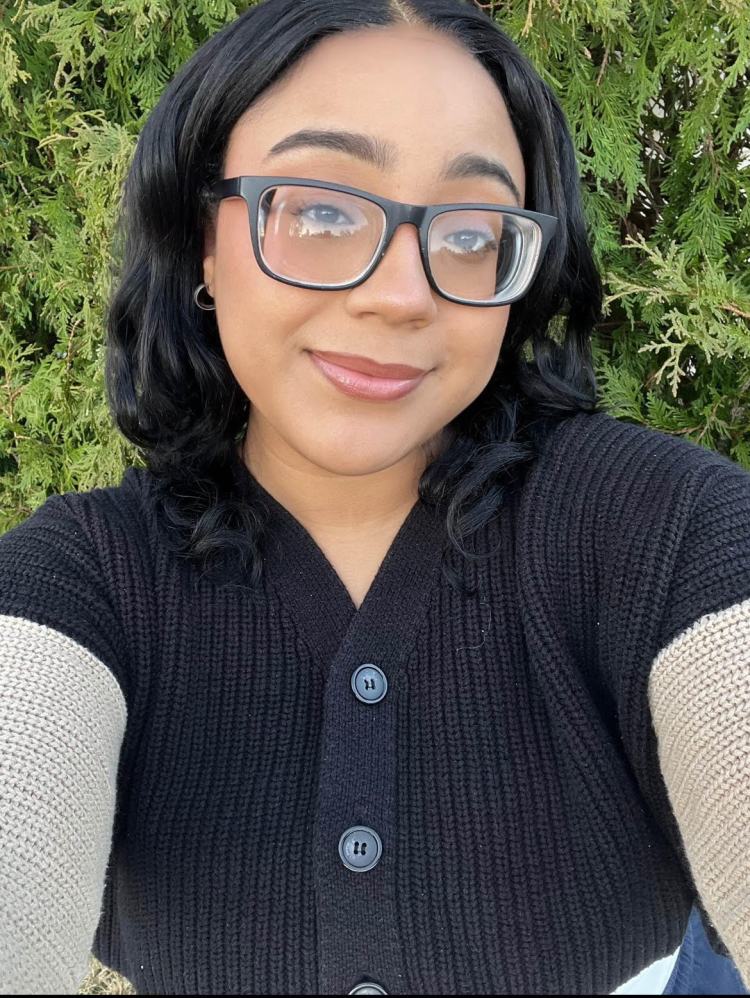
A Poem by Jezlyn Montas
To Be Where We Are Not Wanted

They say the city is always changing,
but the boundaries stay fixed.
New tenants move in,
and the scaffolding follows, nothing really sticks
"You’ll be walking and the houses will get closer together.
There’ll be less green spaces, more concrete, more litter..."
They rebuild what they once called broken,
though it was only Black.

The rent triples overnight.
The murals—once declarations of memory—
are scraped clean by hands
that never asked what lived beneath the paint—
thick coats of beige rolled across
faces that watched us grow,
names that marked safe passage,
eyes that held witness.
The brush moves without pause,
as if history were disposable.
They call it "revitalization"
as if joy wasn’t already blooming
through cracked pavement,
as if love hadn’t been holding itself
from porch to porch, all along.

"It’s fucked up that White people
are the only ones who are considered
deserving of some quality."
To the city, it was a zone to monitor.
To developers, untapped potential.
To us? It was our mother’s arms.

To walk these streets now—as a Black woman, a student,
is to feel the contradiction pressed against your skin.
To live between where you came from
and where you're told you don't belong.
To move through campuses that promise access,
yet know that we are never truly welcomed.
Black women are the first to name the fracture,
to feel it cut across their bodies,
to notice what others choose to ignore.
We don’t just see the shift—we carry it.

We pass by Columbia and feel Harlem narrowing.
We have seen Penn stake its claim in West Philly,
We watched UChicago tighten its grip on Woodlawn,
and USC cast shadows across South Central.
These schools expand like slow floods,
taking brick and breath from what existed before them.
They call it expansion. We call it erasure.
The buildings bear names
of men who never touched our histories,
but profited from our presence.
And still, they build fences
to remind us: this was never meant for you.
"You could feel it as far as the atmosphere goes."                                                                                                                                                                                                                                                         Gentrification is not new; it is rebranded conquest—                                                                                                                                                                                                                                                    Columbus without ships, manifest destiny in a brochure.

And for Black women students, awareness becomes armor.
"Constantly patrolling how I look, and how I present myself,"
recalls one who never expected to feel so invisible,
so watched at the same time.
I lower my voice.
Flatten my presence.
My body learns how to shrink without instruction.
Not out of politeness,
but from knowing what happens when you take up too much space
in a room that was never made for you.

They call it etiquette.
I call it endurance.

We bend, not to belong,
but to stay alive.
We shift not to blend in,
but to become legible to power.
This is not a choice. It is choreography.
We dance survival in quiet steps,
measured tones,
smiles that double as armor.

Still, we gather.
Still, we find one another
at the Black Cultural Center,
at the margins of the classroom,
in the corners where no one is watching.

We do not just seek refuge—we build it.
Community organizing. Friday dinners.
We create a language for ourselves
that does not need translation.

We make space
where they swore we could not fit.

To be a Black woman college student
in a place that polices your existence
is to feel the exile in your bones
and still name yourself whole.
To call the contradiction by name,
and still make it home.

As Audre Lorde taught us:
"Caring for myself is not self-indulgence,
it is self-preservation."
And we have always known
how to preserve
what was never meant to survive.
 CYPHER